Vodafone

Agent Efficiency &
Insurance Integration.

Integrating a new device insurance product into an information-dense enterprise platform used by over 100,000 Vodafone customer agents — without increasing cognitive load or slowing down response times.
Client
Vodafone
Role
UX Designer
Duration
2.5 months
Platform
Enterprise Agent Tool · 100k+ Users
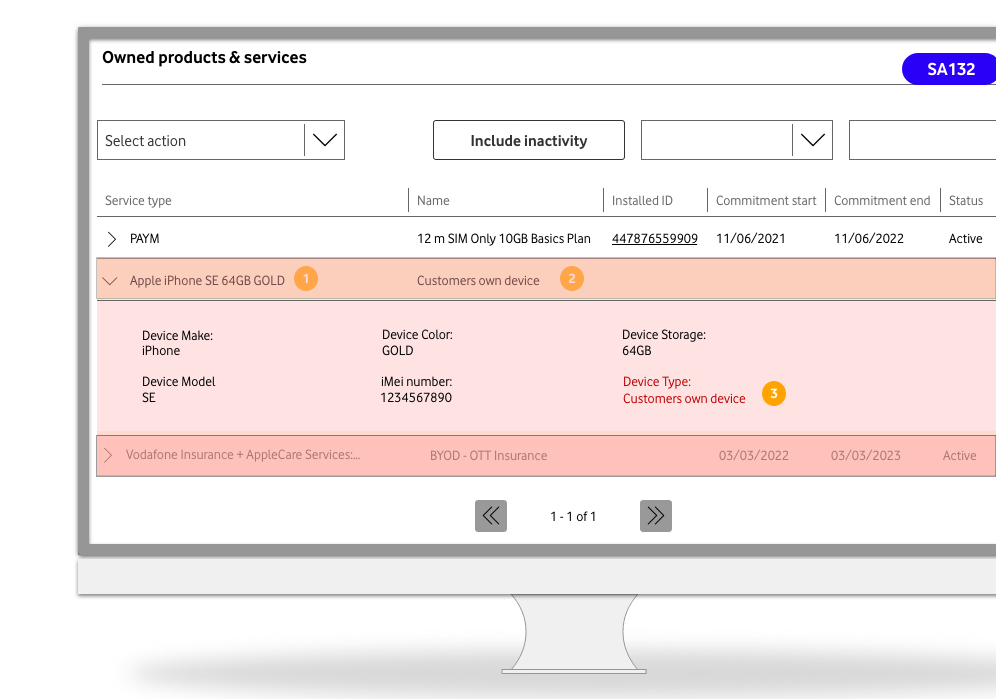
Vodafone agent platform

Vodafone agent platform — insurance integration flow

The Problem

A new product, an already saturated screen

Vodafone wanted to launch a new device insurance product — "Over the Top" insurance — for customers who had bought devices outside Vodafone stores. The opportunity was clear. The challenge was delivery.

The enterprise agent platform was already dense with information across six distinct customer journeys: package updates, upgrades, change of ownership, and more. Adding another product on top risked overwhelming agents who were already working at speed.

Eligibility
How could agents quickly determine if a customer's external device qualified for insurance?
🔀
Integration
How would this product fit across 6 different existing customer journeys without disrupting them?
Key Performance Target
Agent average response time must stay under 50 seconds — even with the new product integrated.
The Process

Stakeholder workshops first, then frontline agents

I started with a cross-functional workshop bringing together the Product Owner, Business Analyst, Propositions Lead, Solution Architect, and Tech Designer. Together we mapped the existing six customer journeys and identified where the insurance product would conceptually sit within each.

This wasn't just alignment — it was a shared artefact that everyone could reference. The user flows built in this session became the backbone of every design decision that followed.
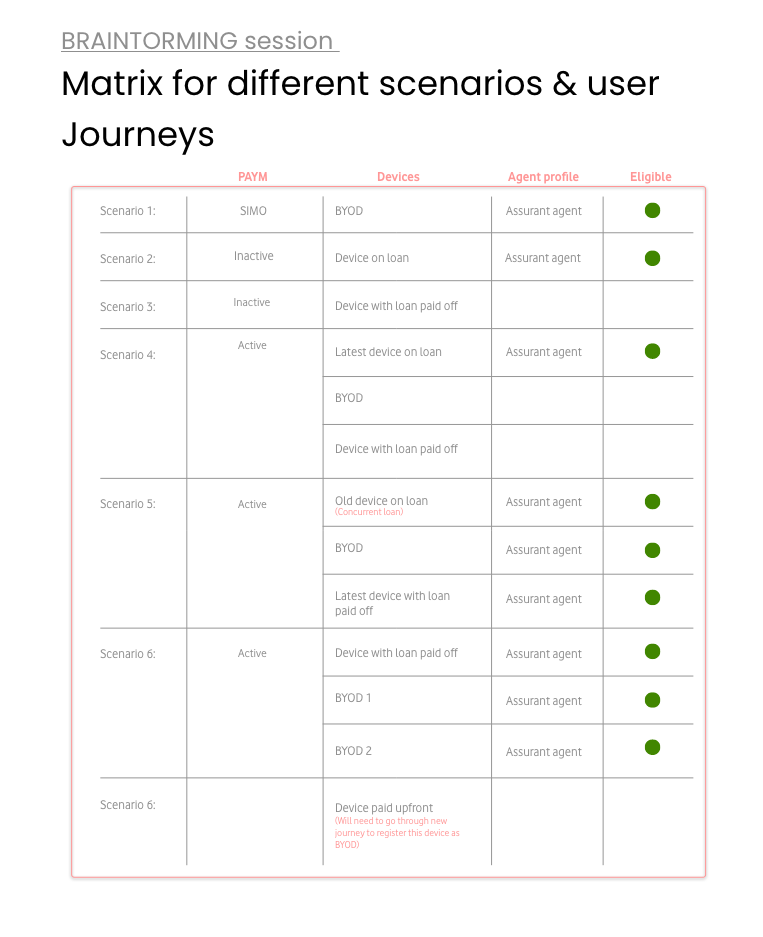
Stakeholder matrix

Stakeholder and journey mapping matrix — built collaboratively in workshop

I then conducted interviews with three frontline customer agents. These were the people who would actually use this every day under time pressure. Their insight was direct and practical — and it confirmed the cognitive load concern was real, not theoretical.
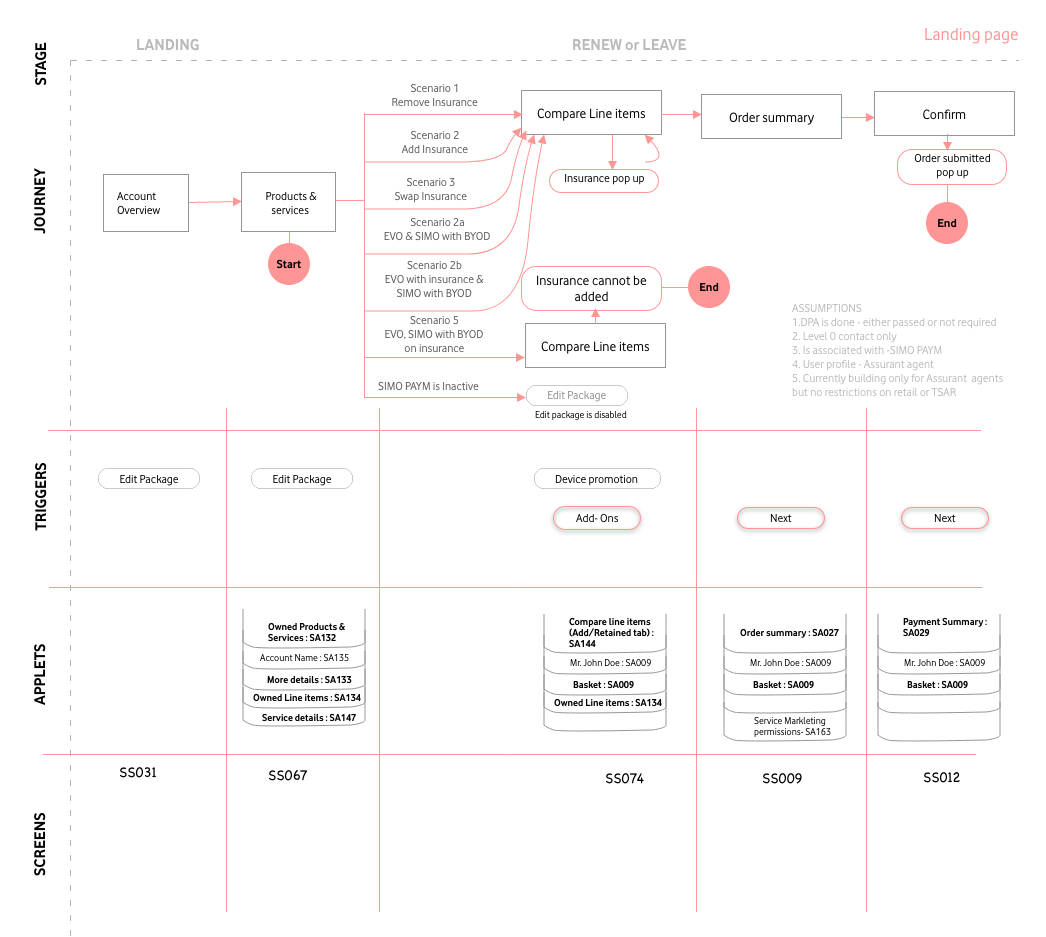
User flow across journeys

User flow — insurance integration points mapped across all six customer journeys

Key Decisions & Rationale

Why progressive disclosure was the only answer
Progressive disclosure over upfront information
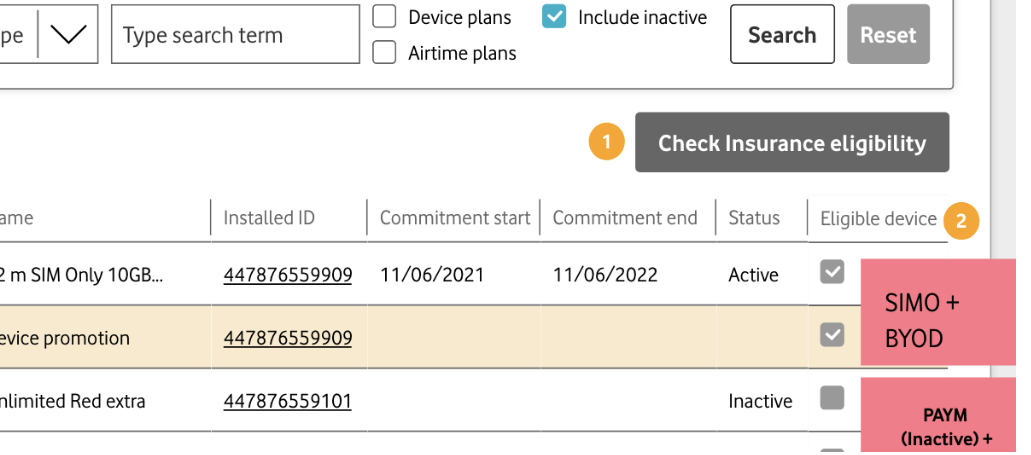
Instead of surfacing all insurance options on the main screen, I designed a conditionally visible "Check Device Insurance Eligibility" button. It only activates and appears when relevant within a specific customer journey. Agents not dealing with insurance queries are never distracted by it — reducing unnecessary cognitive input entirely.
Grounded in the BIAS behavioural framework
The BIAS framework (Block-Interpret-Act-Store) informed this directly. It tells us users will "Block" information that feels irrelevant to their current task. So the design frames context deliberately — information only enters the agent's view when it's directly actionable, helping them Interpret the screen faster and Act with confidence.
Context-sensitive eligibility display
When an agent activates the button, only the eligible devices for that specific customer are shown — alongside relevant insurance options tied to their exact packages. No generic lists, no irrelevant options. The agent sees only what matters for this call, right now.
Embedded across all six journeys — not bolted on
Each of the six customer journeys (package update, upgrade, change of ownership, etc.) required careful analysis to find the right integration point. The same progressive disclosure mechanism was embedded consistently, so agents could build a single mental model regardless of which journey they were in.
Progressive disclosure design

Progressive disclosure mechanism — insurance only surfaces when contextually relevant

The Solution

One button. Six journeys. Zero disruption.

The final solution centred on a single, intelligently activated button — "Check Device Insurance Eligibility" — that became the entry point for the entire insurance flow without ever cluttering the primary agent screen.

Before — button inactiveAfter — eligibility revealed

Before activation (left) — clean primary screen. After activation (right) — eligible devices and options revealed.

On activation, a focused overlay displays the customer's eligible devices and their relevant insurance options — no unnecessary information, no new mental model required. The agent can check eligibility, present the right option, and close out the interaction without breaking their rhythm.

This integration was deployed consistently across all six high-volume agent journeys, meaning the same interaction pattern worked whether the customer was upgrading, changing ownership, or updating their package.

Leadership & Collaboration

Raising the bar for the team around me

Alongside the delivery work, I invested time in building the capability of the designers around me — creating resources that outlasted the project.

📖
Junior onboarding handbook
Created a comprehensive onboarding handbook for new joiners covering Vodafone's ways of working, the atomic design system, and the end-to-end design process — reducing ramp-up time for incoming designers.
👥
Onboarded 2 junior designers
Personally onboarded two junior designers into the team — walking them through tooling, process, stakeholder dynamics, and design standards in a fast-moving enterprise environment.
🎓
Live project shadowing
One junior designer shadowed me throughout the Over the Top Insurance project — observing stakeholder workshops, design decisions, and cross-functional collaboration in real time as a structured learning experience.
🏆
STAR Award — Design Knowledge Series
Conceptualised and ran a monthly design workshop series for the wider design team — sharing techniques, critiquing work, and elevating design standards across the organisation. The programme continued running independently after I left, a recognition that earned me Vodafone's STAR Award.
Outcomes

A new product launched. Agent efficiency maintained.

The insurance product launched successfully across the Vodafone agent platform — a significant business milestone. More importantly, it did so without disrupting the workflows of 100,000+ agents.

10%
Conversion uplift on the insurance product post-launch
100k+
Agents using the platform — zero workflow disruption
< 50s
Average agent response time maintained — the key performance target
6
Distinct customer journeys integrated with a single consistent pattern
Skills Used
Stakeholder WorkshopsUser InterviewsJourney MappingBehavioural PsychologyBIAS FrameworkProgressive DisclosureCognitive Load ReductionEnterprise UXInteraction DesignWireframingFigmaWCAG 2.2 AA